

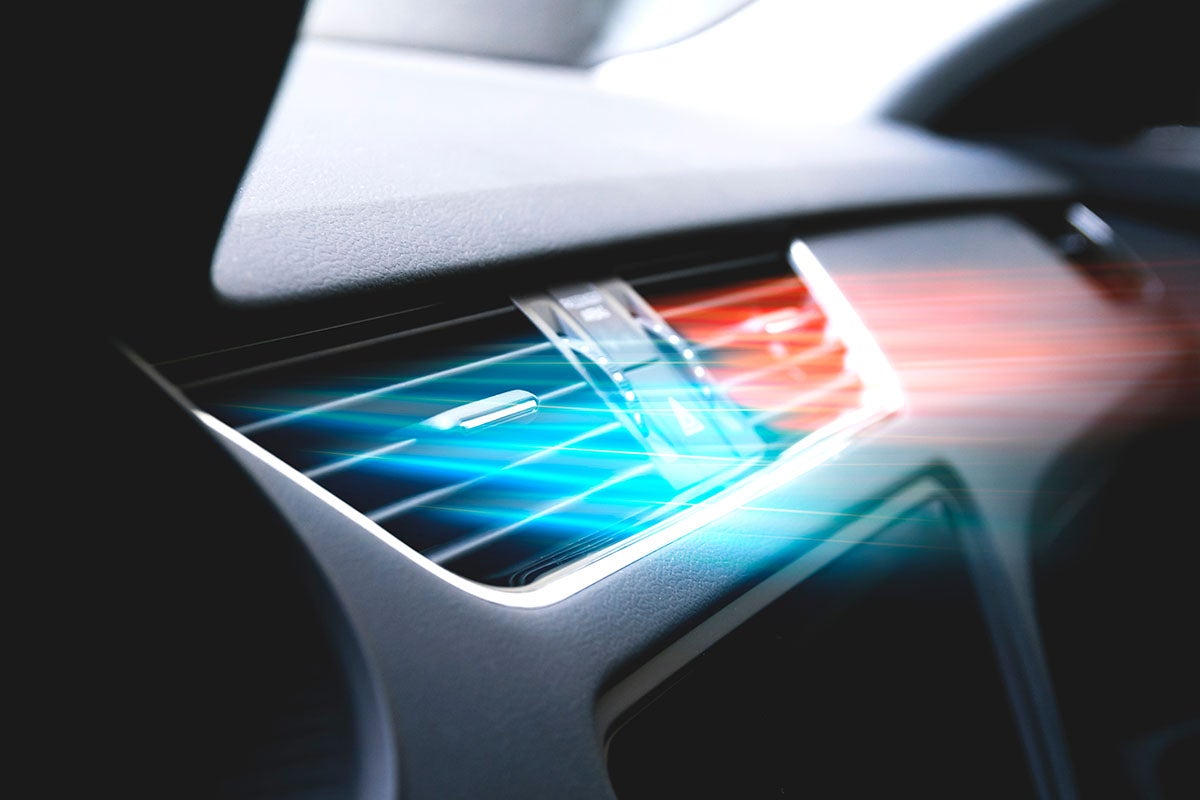
If your Kia heater is blowing cold air instead of warming the cabin, the problem may involve low engine coolant, a malfunctioning thermostat, a restricted heater core, or a faulty temperature-control door. In some cases, the engine simply hasn't reached its normal operating temperature, but persistent cold air can indicate a problem that needs professional attention. For Kia owners in Charlotte, NC, understanding why the heat isn't working can help you identify warning signs, recognize possible cooling system problems, and determine when to schedule a heating system inspection.
Schedule Kia Heater Service Explore Kia Service
Why Is My Kia Heater Blowing Cold Air?
The most common causes of a Kia heater blowing cold air include low coolant, thermostat problems, restricted coolant flow through the heater core, and malfunctioning HVAC temperature controls. However, the cause depends on when the problem occurs and whether the vehicle is experiencing other symptoms.
For example, a Kia Sorento may blow cold air when first started on a chilly morning in Matthews but warm up normally after several minutes. A Kia Sportage that continues blowing cold air throughout a drive along Independence Boulevard may have a different problem.
Most gasoline-powered Kia vehicles use heat from engine coolant to warm the passenger cabin. As the engine reaches operating temperature, hot coolant flows through a small heat exchanger called the heater core. Air passing over the heater core is warmed before entering the cabin.
If the coolant isn't warm enough, cannot circulate properly, or the climate control system doesn't direct air through the heater core, the vents may blow cool or cold air.
1. Low Engine Coolant or a Cooling System Leak
Low engine coolant is one possible explanation for a Kia heater that suddenly stops producing warm air.
Engine coolant absorbs heat from the engine and circulates through the cooling system. In vehicles that use an engine-heated cabin heater core, this same coolant helps provide warmth inside the vehicle.
If the coolant level becomes too low, circulation through the heater core may be insufficient, reducing cabin heating performance.
Potential signs of low coolant include:
- Little or no heat coming from the vents.
- Cabin heat that becomes inconsistent while driving.
- A low coolant level in the reservoir.
- Visible coolant leaks beneath the vehicle.
- A sweet smell that may indicate leaking coolant.
- An engine temperature warning or unusually high temperature reading.
For drivers traveling between Charlotte and Mint Hill, a heater that suddenly stops working alongside an engine temperature warning deserves immediate attention.
Important: Never remove the radiator or pressurized coolant reservoir cap while the engine is hot. Hot coolant and steam can cause serious burns.
Once the vehicle has completely cooled, the coolant level can be checked according to the owner's manual. If coolant is repeatedly low, a professional inspection can help identify a leak or another cooling system problem.
If the engine is overheating, stop safely, turn off the engine, and arrange professional assistance rather than continuing to drive.
2. A Thermostat That Is Stuck Open
The engine thermostat helps regulate coolant temperature by controlling circulation through the cooling system.
When operating correctly, it helps the engine reach and maintain its intended operating temperature.
If the thermostat becomes stuck open, coolant may circulate through the radiator before the engine warms sufficiently. As a result, the engine can take longer to warm up, and the heater may produce only lukewarm air.
Possible signs of a stuck-open thermostat include:
- Cabin heat that remains weak after extended driving.
- An engine temperature gauge that stays unusually low.
- Longer-than-normal engine warm-up times.
- Heater performance that changes with outside temperatures or driving conditions.
For example, a Kia K5 traveling from Matthews toward Concord may produce little heat even after the engine has been running for an extended period.
Although this can suggest a thermostat problem, low coolant, sensor faults, and other conditions can create similar symptoms.
A technician can evaluate coolant temperature readings and thermostat operation before recommending replacement.
3. A Clogged or Restricted Heater Core
The heater core is a small heat exchanger located within the vehicle's heating and ventilation system.
Warm engine coolant circulates through the heater core, allowing the blower fan to move heated air into the passenger cabin.
Over time, contamination, deposits, or other cooling system problems can restrict coolant flow through the heater core.
When this happens, the heater may have difficulty producing sufficient warmth even after the engine reaches normal operating temperature.
Possible symptoms include:
- Weak or inconsistent cabin heating.
- Heat that changes depending on engine operating conditions.
- A sweet coolant odor inside the vehicle if the heater core is leaking.
- Unexplained coolant loss.
- Damp carpeting near the dashboard in some cases of heater core leakage.
A restricted heater core and a leaking heater core are different problems, but both may require professional inspection.
Because the heater core is connected to the engine cooling system, technicians may evaluate coolant condition, circulation, and system pressure to determine whether the heater core is contributing to the problem.
4. A Faulty Blend Door or Temperature-Control Actuator
Sometimes the engine is warm and the coolant is circulating correctly, but cold air still comes from the vents.
In that situation, the problem may involve the HVAC blend door or its actuator.
A blend door controls how air moves through the heating and air conditioning system. By changing the airflow path, it helps regulate the temperature delivered through the vents.
If the blend door becomes stuck or the actuator fails, the system may not direct enough air through the heater core.
Common symptoms include:
- Cold air coming from the vents even when the temperature is set to high.
- One side of the cabin receiving warm air while the other remains cold.
- Clicking or tapping sounds from behind the dashboard when adjusting the temperature.
- Cabin temperature that does not respond correctly to climate control adjustments.
For example, a Kia Telluride with dual-zone climate control might blow warm air on the driver's side but cold air on the passenger's side.
That symptom may point toward a temperature-control problem rather than a lack of engine heat.
Technicians can inspect HVAC controls, actuator operation, and related components to identify the cause before replacing parts.
5. Heater Blower Motor or Cabin Airflow Problems
A heater that blows cold air is different from a heater that produces little or no airflow.
If the air coming through the vents is warm but barely noticeable, the problem may involve the cabin air filter, blower motor, blower controls, or airflow passages.
A clogged cabin air filter can restrict the amount of air moving into the passenger compartment.
A malfunctioning blower motor or related electrical component may prevent the fan from operating correctly.
Signs of an airflow problem include:
- Very little air coming from the vents.
- A blower fan that only works at certain speeds.
- Unusual noises when the fan is running.
- Airflow that becomes weaker over time.
- Difficulty clearing fog from the windshield.
Replacing a cabin air filter may help when airflow is restricted by debris, but it will not repair a faulty thermostat or restore missing heat from a malfunctioning heater core.
A professional inspection can help distinguish between airflow restrictions and actual heating problems.
Why Does My Kia Heater Only Work While Driving?
Some Kia owners notice that their heater produces warm air while driving but becomes cool when the vehicle stops at a traffic light or idles.
Several conditions may contribute to this pattern, including low coolant, air trapped in the cooling system, or reduced coolant circulation.
In certain cold-weather conditions, an engine may also produce less heat while idling than it does while operating under load.
For example, a Kia Sorento might warm the cabin while traveling along I-485 but produce noticeably cooler air after stopping in traffic.
Although a small change in heating performance may occur under some conditions, repeatedly losing cabin heat at idle should be evaluated, particularly if the engine temperature is abnormal or coolant is low.
Because multiple problems can create this symptom, a technician may need to inspect coolant levels, circulation, and HVAC operation.
Kia Heater Problems: Comparing Common Symptoms
The circumstances surrounding a heating problem can help identify which systems may need inspection.
| Symptom | Possible Cause | What to Check |
|---|---|---|
| Cold air immediately after starting | Normal engine warm-up | Whether heat improves as the engine warms |
| Cold air throughout the drive | Low coolant, thermostat, heater core, or HVAC fault | Cooling system and temperature controls |
| Heat works while driving but fades at idle | Coolant level or circulation issue | Coolant level and system performance |
| Heat only works on one side | Blend door, actuator, or climate control problem | Temperature-control components |
| Little or no air from vents | Blower motor or airflow restriction | Cabin air filter, fan, and controls |
| Sweet smell or damp carpeting | Possible heater core or coolant leak | Heater core and cooling system |
| No heat with engine overheating | Potential cooling system failure | Stop safely and arrange professional assistance |
These symptoms provide clues but cannot confirm the cause without inspecting the vehicle.
Why Does My Kia Take So Long to Warm Up in Cold Weather?
During colder weather, a gasoline-powered Kia may need several minutes to reach a temperature that allows the cabin heater to provide consistent warmth.
This is particularly noticeable after the vehicle has been parked overnight.
Kia's owner's manuals explain that on applicable vehicles, reducing blower speed immediately after a cold start and increasing it once the engine begins warming can improve perceived heating performance.
However, allowing the vehicle to warm briefly is different from extended unnecessary idling. Follow the instructions for your specific model and begin driving normally when appropriate.
If the heater continues blowing cold air after normal warm-up and driving, the vehicle may need inspection.
For drivers commuting from Mint Hill or Matthews into Charlotte on colder mornings, recognizing the difference between normal warm-up and persistent heating problems can help determine when service is appropriate.
What If My Kia Heater Isn't Defrosting the Windshield?
A properly functioning windshield defroster is important for maintaining visibility during cold, rainy, or humid conditions.
The front defrost setting directs airflow toward the windshield. Depending on the model and climate control system, the vehicle may also activate air conditioning to remove moisture from the air.
If the windshield continues fogging, try the following according to your Kia owner's manual:
- Select the front windshield defrost setting.
- Increase the blower speed.
- Set the temperature to an appropriate warm setting.
- Use outside or fresh-air mode instead of prolonged recirculation.
- Allow the climate control system to operate as designed, including automatic A/C activation where applicable.
If the defroster produces very little airflow or cannot clear the windshield, the issue may involve the blower motor, airflow controls, or another HVAC component.
Do not continue driving if condensation or fog prevents you from seeing the road clearly. Stop in a safe location and restore visibility before proceeding.
Are Kia Hybrid and Electric Vehicle Heaters Different?
Yes. Heating systems can operate differently depending on whether the vehicle uses a gasoline engine, hybrid powertrain, plug-in hybrid system, or fully electric powertrain.
Traditional gasoline vehicles generally use engine coolant to supply much of their cabin heat.
Hybrid vehicles may use additional heating controls or electric components to maintain cabin comfort when the gasoline engine is not running continuously.
Fully electric vehicles, such as the Kia EV9 and EV6, use electric heating systems rather than relying on heat from a conventional gasoline engine.
Depending on the model and equipment, an electric Kia may use a heat pump, electric heater, or other thermal management components.
Because of these differences, symptoms that suggest a thermostat problem in a gasoline Kia may have a different explanation in an electric vehicle.
If your Kia Hybrid or EV is not producing adequate cabin heat, have the vehicle inspected by technicians familiar with its specific heating and electrical systems.
Never attempt to service high-voltage components without appropriate training and equipment.
When Should You Schedule Kia Heater Service?
Consider scheduling a heating system inspection when your Kia experiences any of the following:
- Cold air continues coming from the vents after the vehicle has warmed up.
- Heater performance changes unexpectedly while driving.
- One side of the cabin stays cold while the other side warms normally.
- A clicking sound occurs when changing climate control temperatures.
- Cabin airflow becomes weak or stops.
- Coolant repeatedly needs to be added.
- The windshield defroster no longer operates properly.
- A sweet odor or unexplained moisture appears inside the cabin.
Heating problems can sometimes be related to the engine cooling system, making prompt inspection important when symptoms involve coolant loss or temperature warnings.
If the vehicle is overheating, steaming, or displaying an urgent engine temperature warning, stop safely and arrange assistance instead of driving to the dealership.
How Do Kia Technicians Diagnose Heater Problems?
A professional heating system inspection may involve several tests depending on the symptoms and the vehicle's powertrain.
Potential diagnostic steps include:
- Coolant level and leak inspection: Checking for insufficient coolant, damaged hoses, and potential leaks.
- Thermostat evaluation: Determining whether the engine reaches and maintains appropriate operating temperature.
- Heater core inspection: Checking for restricted coolant flow or signs of leakage.
- HVAC actuator testing: Evaluating temperature-control doors and related electronic components.
- Blower system inspection: Checking fan operation, airflow restrictions, and cabin filtration.
- Vehicle diagnostics: Reviewing relevant fault information and electronic climate control operation.
At Planet Kia Charlotte's Service Department, our technicians provide heating and air conditioning service, cooling system repairs, and vehicle diagnostics.
Identifying the underlying issue helps determine whether the vehicle needs a coolant system repair, HVAC component replacement, or another service.
Frequently Asked Questions About Kia Heater Problems
Why is my Kia blowing cold air when the heat is on?
The cause may be low engine coolant, a stuck-open thermostat, a restricted heater core, or a faulty blend door. Cold air immediately after starting can be normal, but heat that remains cold after the engine warms up should be inspected.
Can low coolant cause my Kia heater to stop working?
Yes. In Kia vehicles that use an engine-heated heater core, insufficient coolant can reduce the circulation needed to warm the cabin. Low coolant may also indicate a leak or another cooling system problem.
Why does my Kia heater work while driving but blow cold air when stopped?
Possible causes include low coolant, trapped air, or coolant circulation problems. Heating performance may also change under some cold-weather operating conditions. Persistent or sudden loss of heat at idle deserves professional inspection.
Can a bad thermostat cause weak heat in my Kia?
Yes. A thermostat stuck open can prevent the engine from warming normally, resulting in reduced heater performance. However, thermostat problems cannot be confirmed from weak cabin heat alone.
Why is one side of my Kia blowing hot air and the other side cold?
On vehicles with dual-zone climate controls, this can indicate a blend door, actuator, sensor, or climate control problem. Check that both temperature zones are set correctly before scheduling an inspection.
Can a dirty cabin air filter make my Kia heater stop working?
A clogged cabin air filter can restrict airflow through the ventilation system, making the heater less effective at warming the cabin. However, it generally does not explain why strong airflow remains cold after the engine is warm.
Is it safe to drive if my Kia heater is not working?
It depends on the cause. A heating problem may be limited to cabin comfort, but low coolant or overheating can indicate a more serious engine issue. If windshield visibility is poor or the engine shows signs of overheating, stop safely and address the problem before continuing.
Does Planet Kia Charlotte offer heater repair?
Yes. Planet Kia Charlotte's Service Department offers air conditioning and heater service, cooling system and radiator repairs, and vehicle diagnostics. Our team can help identify why your Kia is not producing adequate cabin heat.
Schedule Kia Heater and Cooling System Service in Charlotte, NC
A Kia heater blowing cold air may be caused by something as straightforward as an engine that has not warmed up or a problem involving coolant circulation, the thermostat, heater core, or climate control components.
At Planet Kia Charlotte, our service team can help diagnose heating concerns and recommend repairs based on your vehicle's symptoms.
Located at 4700 E. Independence Boulevard in Charlotte, NC, we welcome Kia owners from Matthews, Mint Hill, Concord, and surrounding communities.
Whether your Sportage takes too long to warm up, your Sorento blows cold air while idling, or your Telluride has inconsistent cabin temperatures, our technicians can help investigate the cause.
Before visiting, you can also review our current service and parts specials for applicable maintenance offers.
Don't let an unresolved heater problem interfere with your winter driving. Schedule a heating system inspection at Planet Kia Charlotte.
Schedule Kia Heater Service View Service Specials
This article provides general vehicle maintenance information and does not replace professional diagnosis or the instructions in your Kia owner's manual. Heating systems and diagnostic procedures vary by model, model year, and powertrain. Never open a pressurized cooling system while hot. If your vehicle overheats or windshield visibility is impaired, stop driving safely and seek appropriate assistance.
 Warranties include 10-year/100,000-mile powertrain and 5-year/60,000-mile basic. All warranties and roadside assistance are limited. See retailer for warranty details.